

If you run a café, restaurant, takeaway or commercial kitchen, your grease trap probably isn’t the part of the business you think about most. And, ideally, it stays that way.
A properly maintained grease trap quietly does its job in the background, capturing fats, oils, grease and food solids before they enter the sewer. Leave it too long between cleans, though, and you can be dealing with unpleasant odours, blocked pipes, overflows and a trade waste compliance problem.
So, how often should you clean a grease trap? Generally, a business should invest in a pump-out every three months. However, there isn’t one universal grease trap cleaning frequency for every café or restaurant. Your required schedule can depend on your local water authority, your trade waste agreement or consent, the size of your trap and how much greasy wastewater your business produces.
What does a commercial grease trap actually do?
Commercial kitchens produce wastewater containing considerably more fat, oil, grease and food particles than ordinary household wastewater. A grease trap – also called a grease interceptor trap – is designed to capture these materials before the wastewater enters the sewer system.
As wastewater moves through the trap, fats and oils separate from the water while solids settle. The remaining wastewater can then continue towards the sewer. That separation only works effectively while the trap has enough usable capacity. As grease and solids build up, the trap becomes less effective and eventually needs to be completely pumped out and cleaned.
That’s why regular grease trap cleaning isn’t simply a housekeeping job. It forms part of managing commercial trade waste correctly.
How often to clean a grease trap
For many cafés and restaurants, every three months is a useful general benchmark, but your required servicing interval may be different. How often your trap actually needs pumping comes down to two things: how big it is, and how much greasy waste goes into it. A busy restaurant turning out large volumes of oily wastewater will fill a trap considerably faster than a small café doing coffee and toasted sandwiches.
The number that matters most, though, isn’t a general benchmark. It’s the one written into your trade waste consent or agreement. Water authorities across the region set a minimum cleaning frequency for commercial customers with pre-treatment equipment, and that document is where yours is recorded.
So when you’re working out how often to clean your grease trap, start there. Then adjust if your trading volume, menu or kitchen practices have changed since it was set.
Why grease trap cleaning frequency matters
Waiting until your grease trap looks full is not a good maintenance strategy. An overloaded trap allows fats, oils and grease to move further into your plumbing and the sewer network. Left long enough, that turns into rancid grease odours, blocked sewer pipes and greasy waste spilling out on your property. For a commercial kitchen, that creates problems well beyond the trap itself.
- Blocked drains and plumbing: When grease escapes the trap and cools inside pipes, it accumulates on the pipe walls. Over time, that restriction contributes to slow drainage and blockages.
- Bad smells: Old food material, grease and oils sitting in an overdue trap generate strong odours, which is hardly ideal when customers are sitting metres away enjoying lunch.
- Overflows: A badly overloaded system can overflow, creating an unpleasant clean-up and potentially interrupting normal business operations.
- Trade waste compliance issues: Restaurants, cafés, fast-food businesses and other commercial kitchens are generally classified as trade waste customers. That comes with obligations: maintaining your pre-treatment equipment and following the servicing requirements set out in your trade waste consent or agreement.
Keeping to the correct grease trap cleaning frequency is therefore about both protecting your plumbing and meeting your responsibilities as a business.

Signs your grease trap could need attention
Your scheduled service should ideally happen before the trap begins causing problems. However, warning signs can include:
- Persistent or worsening smells around the trap or drains
- Slow-draining sinks
- Wastewater backing up
- An unusually high level of accumulated grease and solids
- Grease appearing where it shouldn’t downstream
- Overflowing around the trap
- recurring drainage problems in the kitchen.
If your trap repeatedly causes problems before its scheduled clean, it may be worth reviewing your servicing interval rather than simply dealing with the same issue each time.
Can kitchen practices affect how often a grease trap needs cleaning?
Yes. The more food, oil and grease you send towards the trap, the harder it has to work.
A few habits make a real difference:
- Dry-wipe plates and utensils before they go anywhere near the sink
- Keep used cooking oil out of the sinks entirely and collect it separately
- Scrape food scraps into the bin or organics collection, not down the drain
- Sweep floors rather than hosing solids into the wastewater drains
- Fit and clean sink strainers, and empty them into the bin.
Good kitchen practices don’t remove the need to clean your grease trap. They do reduce unnecessary loading on the system and help it work as intended between services.
Who should clean a commercial grease trap?
This isn’t a job for a bucket and a spare half-hour after closing. Grease trap waste is regulated. The contents have to be removed by a licensed waste collector and taken to an appropriate facility for disposal, and you need to be able to show it was handled properly if you’re ever asked.
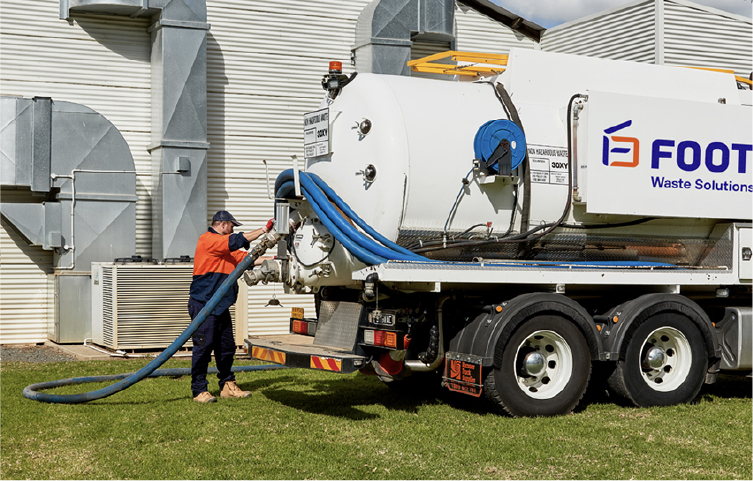
At FOOTT, we provide commercial grease trap cleaning across our service regions and handle the removal and disposal of liquid waste through our established liquid waste service.
What happens during grease trap cleaning?
A proper grease trap service involves pumping out the accumulated contents rather than simply skimming the visible layer of grease off the top. Our commercial liquid waste service removes grease, oils and accumulated waste from the trap so the system can keep operating effectively. The servicing cost varies according to the capacity of the unit and the volume pumped out.
For busy hospitality businesses, putting cleaning on a regular schedule also removes one more job from the mental checklist. You know when the trap is due. Your team knows what to expect. And you’re much less likely to remember it because an unpleasant smell has suddenly arrived during Friday dinner service.
A simple grease trap maintenance checklist
To keep your system easier to manage:
- Check the cleaning interval listed in your trade waste consent or agreement.
- Schedule servicing ahead of the due date.
- Keep records of completed pump-outs.
- Train kitchen staff to keep cooking oils, scraps and unnecessary solids out of sinks.
- Pay attention to unusual smells or drainage issues between services.
- Review your cleaning frequency if your business volume or kitchen operations change.
And don’t assume another café’s servicing schedule automatically applies to yours.
Need help staying on top of your grease trap schedule?
We clean grease traps for cafés, restaurants and other commercial businesses across regional Victoria and southern New South Wales. Our team can work with you to set a regular servicing schedule around your requirements, which makes one of the less glamorous parts of running a commercial kitchen much simpler. We schedule grease trap cleaning in line with local water authority requirements.
Talk to us about commercial grease trap cleaning and spend less time wondering when the trap was last pumped out.
Book a free waste audit
If you’re not certain your current servicing interval is right, a waste audit is the quickest way to find out. We offer these free to businesses across the region, whether you’re already a customer or not. One of our team visits your site, goes through the waste services you have in place and points out where there’s room to improve, from servicing intervals that don’t match your trading volume through to streams that could be handled more sensibly.
For a commercial kitchen, that means looking at the grease trap alongside your general waste, recycling and organics rather than treating each as a separate arrangement.